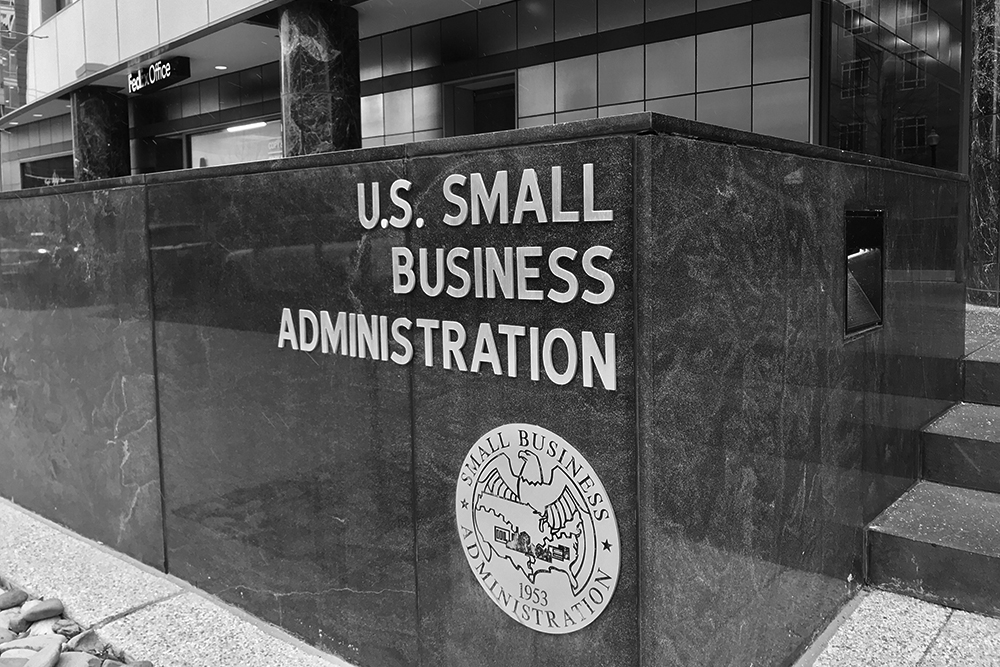
Getting a $500,000 infusion for your business used to be a standard milestone. It was the "sweet spot": enough to fund a major expansion, purchase heavy equipment, or buy out a competitor, but small enough that the paperwork didn't feel like a mountain.
That changed on March 1, 2026.
The SBA has overhauled its underwriting guidelines. While some barriers have fallen, others have been reinforced with steel. If you are applying for an SBA 7(a) loan today, you are walking into a different environment than you were just 12 months ago. At Funding Suite, we stay ahead of these shifts so you don't have to. We’ve analyzed the new mandates and narrowed down exactly what you need to know to secure your funding without the headache.
Here are the five critical shifts in SBA underwriting rules you must navigate to get your $500k loan approved.
1. THE CITIZENSHIP LOCKDOWN: 100% U.S. OWNERSHIP REQUIRED
This is perhaps the most significant and surprising change in the 2026 update. In previous years, Lawful Permanent Residents (Green Card holders) and certain non-citizen nationals were eligible for SBA assistance. That door has effectively slammed shut for new applications.
As of March 1, 2026, only businesses owned 100% by U.S. citizens or U.S. nationals are eligible for SBA 7(a) and 504 loans.
This isn't just about the majority owner. The SBA now looks at indirect ownership. If a holding company or a partnership has any stake in your business, every single individual behind those entities must be a U.S. citizen. Even a 1% stake held by a non-citizen can disqualify a $500,000 loan application.
WHAT THIS MEANS FOR YOU:
Before you spend weeks on an application, audit your cap table. If you have international investors or partners who are not yet citizens, the SBA is no longer a viable path. At Funding Suite, we can quickly pivot you to private unsecured business loans or revenue-based financing that does not carry these strict federal citizenship mandates.

2. GOODBYE AUTOMATION: THE RETURN OF MANUAL COMMERCIAL ANALYSIS
For years, the SBA relied heavily on the Small Business Scoring Service (SBSS). It was an automated "pass/fail" score that allowed lenders to fast-track smaller loans. If your score was high enough, the underwriting was light.
That system was discontinued for federally regulated lenders on March 1, 2026.
The SBA now requires a full commercial credit analysis for every loan, regardless of the size. For a $500k request, you are no longer just a number in a computer. A human underwriter is now going to look at your business through the same lens they use for traditional, non-SBA commercial loans.
THE CHALLENGE:
Manual underwriting is slower and more invasive. Lenders will scrutinize your:
- Year-over-year revenue trends.
- Vendor payment history (not just your FICO score).
- Industry-specific risks and economic headwinds.
- Debt-to-income ratios on a granular level.
OUR SOLUTION:
Because the process is now more rigorous, your presentation must be flawless. We help you package your "credit story" so that the human underwriter sees the strength behind the numbers. We move fast to ensure "manual" doesn’t mean "slow."
3. THE NEW GOLD STANDARD: 1.1:1 DEBT SERVICE COVERAGE RATIO
Cash flow is the lifeblood of any loan approval. Under the new rules, the SBA has set a hard floor for the Debt Service Coverage Ratio (DSCR). For 7(a) loans, you must demonstrate a DSCR of 1.1:1 or higher.
In plain English: For every $1.00 of debt payment you owe (including the new loan), your business must generate at least $1.10 in net operating income.
WHY 1.1:1?
The SBA is tightening the cushion. They want to see that even after you pay all your business expenses and your loan installments, you still have a 10% profit margin left over. This is measured on both a historical basis (what you did last year) and a projected basis (what you will do after the $500k hits your account).
PRO TIP:
Many business owners maximize tax deductions to show lower income. While this saves money in April, it kills your DSCR in May. If you’re looking for $500k, we need to show the bank that your business is a cash-flow machine.

4. COLLATERAL IS NO LONGER OPTIONAL AT $500K
There is a common myth that the SBA doesn't require collateral. While it’s true they won't decline a loan solely for a lack of collateral, their policy for loans over $25,000 has become much more aggressive.
For a $500,000 loan, lenders are now mandated to take all available collateral.
This includes:
- Business Assets: Equipment, inventory, and accounts receivable.
- Real Estate: If the business operates out of a building you own, the lender will take a lien on it.
- Personal Assets: If the business assets don't fully secure the $500k loan, the lender will look at personal real estate (equity in your home) to bridge the gap.
THE REALITY CHECK:
You cannot "shield" assets anymore. If you have equity available, the SBA expects it to be pledged. However, we specialize in navigating these intricacies. We work to ensure that the collateral requirements are fair and don't stall your personal financial goals.
5. THE SILVER LINING: REMOVAL OF PERSONAL NET WORTH CAPS
It’s not all "tighter" rules. There is one major victory for successful entrepreneurs in the 2026 update. The SBA has officially eliminated the "Personal Resources Test."
Previously, if you: the business owner: had too much personal liquidity or a high net worth, the SBA would tell you to "use your own money" instead of taking a government-guaranteed loan. This often penalized the most successful owners who wanted to keep their personal cash for other investments.
THE NEW RULE:
There is no longer an automatic disqualification based on how much money you have in your personal savings account.
BUT THERE IS A CATCH:
You still have to satisfy the "Credit Elsewhere" requirement. You must be able to demonstrate that you cannot obtain the same loan terms from a non-government source. This is a subtle but important distinction. You can be wealthy and still get an SBA loan, provided the business itself needs the specific terms (like a 10-year term or lower down payment) that only the SBA provides.

HOW TO SECURE YOUR $500K IN THIS NEW ENVIRONMENT
The landscape is more complex, but the capital is still there for those who know how to ask for it. The "manual" nature of the new underwriting rules means that your relationship with your lender matters more than ever.
At Funding Suite, we are your dedicated partners in this process. We don't just "submit" applications; we engineer them for success.
OUR STREAMLINED PROCESS:
- Instant Prequalification: We analyze your citizenship status and DSCR within 24 hours to ensure you aren't wasting time on a "No."
- Expert Documentation: We help you compile the commercial credit analysis files that underwriters now demand.
- Strategic Positioning: We frame your "Credit Elsewhere" argument to protect your personal net worth while securing the $500k you need.
- Fast Funding: Our deep network of SBA-preferred lenders allows us to bypass the typical bank bureaucracy.

THE BOTTOM LINE
A $500,000 SBA loan is a powerful tool for growth, but the 2026 rules have made the "DIY" approach dangerous. One mistake in your ownership disclosure or a slight miscalculation of your DSCR can lead to an instant rejection and a "red flag" in the SBA system that follows you for years.
Don't leave your expansion to chance. Obtain the expert guidance you need to navigate these new, tighter rules.
Ready to see if you qualify under the new 2026 guidelines?
Complete our quick assessment today and get a decision in as little as 24 hours.